Sunday, March 20, 2011

LaReserva.com


I found this incredible website called LaReserva.com  It's filled with interesting stories about nature and the environment. I have it bookmarked already :)

The Fly Geiser, Nevada, US - http://www.lareserva.com/home/fly_geiser

The Rainbow Rose, Holland and UK - http://www.lareserva.com/home/rosa_arcoiris
The Wave, Arizona - http://www.lareserva.com/home/arizona_the_wave
Big Blue Hole, Belize - http://www.lareserva.com/home/gran_agujero_azul

Amazing starfish - http://www.lareserva.com/home/estrella_de_mar

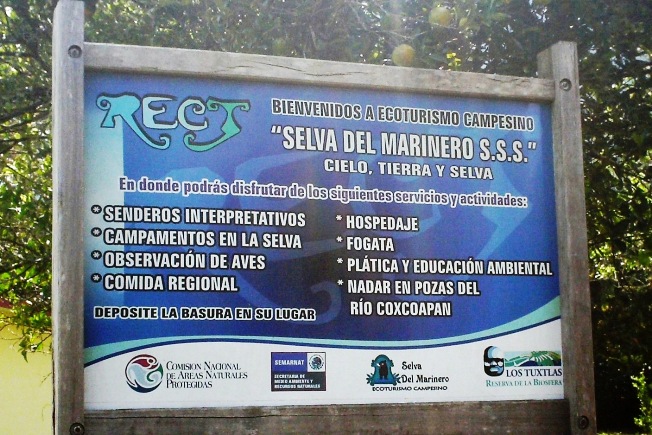
Selva del Marinero: Ecoturismo Campesino


If you're looking for a fun thing to do during your holidays in Mexico, visit the ejido Lopez Mateos and stay at the Selva Del Marinero community forestry ecotourism initiative!

.


This will be a LONG post about my experience there and my thoughts. Tourism can bring many benefits
to an area, but at the same time the costs can be quite high if a scheme is not
managed appropriately and fails to be economically viable, environmentally sensitive
and culturally appropriate. Implementing sustainable tourism practices is what
many tourist destinations aim for, albeit the many difficulties associated with
it, such as the amount of  time
needed for the scheme to be economically profitable and the trend towards
unsustainability  as
locations become more popular. Three years ago I went to Los Tuxtlas Biosphere
Reserve in Veracruz, Mexico, and participated in a number of projects related
to conservation and biology. With a group of students from Stanford University
(mostly Biology and Latin American Studies majors) I visited a small community
initiative, “
Selva del Marinero: ecoturismo campesino”.


.


 ‘Ecotourism’ is a relatively new concept whose main feature
is sustainability. Despite the many definitions for this concept, I will use ecotourism
as the “responsible travel to fragile and usually protected areas that strives
to be low impact and small scale. It helps educate the traveler; provides funds
for conservation; directly benefits the economic development and political
empowerment of local communities; and fosters respect for different cultures
and for human rights.” I’ve come across the idea that not all ecotourism can
be sustainable, but since the above definition encompasses the present
and
future well being of local people through conservation, I believe that all
ecotourism has to be sustainable in order to be called ecotourism.


.


As I said before, ‘Selva del
Marinero: ecoturismo campesino’
is an ecotourism scheme located in the Biosphere Reserve of Los Tuxtlas
in the
ejido Lopez Mateos in Veracruz, Mexico. This region is the
northernmost tropical rainforest in North America and one of Mexico’s most
biologically rich forests, with a high percentage of endemic flora and fauna.
75-80% of Mexico’s forested land is found in
ejidos, rural systems of
cooperative land tenure resulting from a land reform that extended from the end
of the 1910 Revolution until the constitutional reform of 1994.
Ejidos are composed of two different
kinds of property rights over land: individual parcels, used for agricultural
activities, and common lands, mainly dedicated to pasture and forest.


.


The forests provide a number of
vital ecological functions and a wide range of ecosystem services for the
inhabitants of the area. However, despite their high ecological values,
Mexico’s forests are being lost at an alarming pace: the country may have
already lost as much as 95% of its original tropical forest cover. The overall
deforestation rate in the
ejidos, which is equal to 1.4% per year, is
higher than the 1.2% national average. The
ejido Lopez Mateos was no
exception: slash-and-burn agriculture was practiced, land was turned into
cattle ranches and the streams were over-fished because of the lack of economic
programs for the new settlers when land was distributed to communal farms in
1972. Legal possession and land rights were recognized only 10 years later, and
during those years the lands was exploited.


.


The idea of ecotourism was born
in the community in 1993 after stakeholders’ workshops organized and
facilitated by an external convener (a researcher of the National University),
which allowed the identification of hopes and ideas for the future. The
community started working right away, willing to try out this new alternative
that wouldn’t compromise the conservation of their land. We can see in this
example that even in communities that are very interested in sustainable
management of their forests, they often face a number of challenges that
eventually lead to excessive deforestation: non-conducive policy environments,
inadequate business skills, and limited access to financial services.


.


Local management committees were
created as needs appeared (e.g. Food Committee made up of the women of the
village), which was a great step in promoting the empowerment of local
communities in the management of natural resources. This allowed for specific
committees to liaise with local authorities on matters affecting them, such as
local ecological legislation. The stakeholders’ participation meant they were
completely in charge of the decision making process, and every member of the
community developed a sense of pride for the job they carried out.


.


High amounts of time, effort and
preparation are needed for a community like the
ejido Lopez Mateos to reach profitable
sustainability. The village received its first ecotourists in the summer of
1997 and since then has gone through a lot of positive changes to improve the services
they offer to visitors, such as training (first aid, confidence workshops for
women, etc).Governmental organizations have
invested millions of pesos in the village to make ecotourism more viable and
reduce deforestation of the forest. Thanks to this, the community has been able
to build the infrastructure needed to receive the visitors. The
ejido
also linked with other communities that had a shared vision into the Network of
Community Ecotourism of Los Tuxtlas (
Red de Ecoturismo Comunitario,
RECT).  This step was taken
because, although managing tourist destinations at a large spatial scale (i.e.
state or country level) is problematic, managing them with too narrow
boundaries does not allow for the maintenance of adequate learning and
networking infrastructures. They claim that they practice the “most authentic
form of ecotourism” (RECT 2005) and the union has increased the quality and
quantity of services offered to visitors: bird watching, community projects,
hiking through established trails and camping. The most attractive part, however,
is the authentic interaction with the culture and locals.


.


Extraoficially, between 800 and
1200 visitors go each year, the majority being national. Visitors pay around
$550 MXN per day (minimum wage is $54 MXN per day, or $4.4 CAD), and buy the local
crafts and products produced by the community throughout the year. The project
is becoming profitable just now, after more than 12 years of it being
implemented in the community, and still follows the environmental guidelines
set at the beginning.


Overdevelopment and overcrowding
of tourism destinations, accompanied by environmental and social impacts,
destroy the very basis of the original tourist attraction. Although the
ejido
is a commons, the possible ‘tragedy of the commons’, as described by Hardin, does
not offer a possible model of economic unsustainability in Lopez Mateos. This
is because there is no inequity in benefit sharing. There is a communal
incentive to protect the environment and maximize the benefits in the long run,
and there are no individual stakeholders that would want to utilize the
ecotourism site beyond sustainable level: all the revenues stay within the community
and there is no outside company that externalizes income.


.


Furthermore, even if the whole
community’s economy depends directly or indirectly on ecotourism (this is the
main source of revenue even if some land is still used for subsistence agriculture),
the inhabitants consider that the economic aspect is not the most important
reason for having undertaken this project. Wildlife and environmental
conservation and education to create awareness on the importance of ecosystem
services are the main socio-economic benefits derived from ecotourism: there is
the notion between community members that if this is achieved successfully,
their children will get to experience the forest just as they had the
opportunity to do.


In late 1998, when the Tuxtlas
Biosphere Reserve was created, the
ejido was left out of the nucleolus
zone and wasn’t expropriated because of the conservation efforts that had been made
by inhabitants, including the other projects interrelated to ecotourism:
production of organic manure, firewood-saving stoves and non-timber products,
planting of native tree species for firewood, and using solely ecotechnologies
to power the village and provide it with piped and hot water, sewage, and
electricity. The visitors also have to follow an environmental code of conduct.


.


It’s a prevalent idea that
widespread poverty always correlates with a widespread lack of awareness of the
ecological values and their contributions to productive activities, and that
this has always hampered effective policy integration. It is also believed that
a failure to effectively administer and enforce forestry and conservation laws
means that most people see little risk in law-breaking. However, this is not
the case in the community Lopez Mateos: here the tourism is self-regulating.
There is no sanction if guidelines are not followed, but members of the
community have a strong land ethic because their livelihoods depend on nature.
The members of the community developed the governance on the use of their
natural resources to begin with, and the environmental perspective of their
land-use ethic changed in approach as the disastrous effects of a previous
model (governed solely by economic self-interest) were witnessed. I believe
this ethical relation with the land is possible because, as best said by Aldo
Leopold, “of the love, respect, and admiration for the land, and a high regard
for its value”.


.


Something that deeply impressed
me is the way in which these communities prove wrong the idea that people
living in marginal areas are ignorant. Despite extreme poverty levels of the
region, the knowledge that members of the community have on the land they live
in is impressive. The inhabitants have a clear understanding and assessment of
the environmental services they make use of (water, trees, biodiversity, etc.),
and the tour guides are more than willing to share this knowledge and explain processes
such as nitrogen fixation or germination, knowledge that comes from having deep
ties to the land.  Despite the high
levels of investment from within and outside the community, there are still many
difficulties because of the remoteness of the location and difficult
communication with tourists: the only telephone line was installed in 2001 and
Internet access remains limited to the nearest town of Catemaco 20km away.
Despite the continuous struggles, the initiative and hard work of the members
of the community is outstanding. Ecotourism requires full time work, even out
of the peak season, demonstrating the members’ commitment to and trust in the
ecotourism co-operative they’ve created.


.


I found this new concept of “Learning
Tourism Destination” which I think applies to this community. This basically
means that the destination is adaptive to change and capable of learning how to
improve sustainability continuously, using throughout this process appropriate technologies
adequate for the level of development of the communities. The success of this community
in achieving sustainability can be mainly attributed to the relatively small
scale and slow growth of the project, the outside investment and initial help,
and the enhanced opportunities community members received for strengthening
their goals as environmental decision makers.


.


I recently also read an article about
a business approach to promote community forestry enterprises using REDD
(Reducing Emissions from Deforestation and Forest Degradation – this uses
carbon credits and financial incentives to reduce deforestation and forest
degradation, and is usually accompanied by co-benefits, such as biodiversity
conservation, poverty alleviation and enhancement of carbon stocks). The
proposed mechanisms for promoting small and medium forest enterprises included:


1.Building a business environment
(this is mostly the legal framework to have things such as clear property
rights)


2. Provision of business
development services (these are the non-financial services: marketing, skills
development, legal services, product design, technology access)


3. Access to financial services
(like provision of credit, insurance, money transfers, etc.)


These would ideally create a
sustainable system based on carbon credits and REDD payments would benefit the
community, but the purpose of the business approach would also be to broaden
the enterprises and include things like timber and services so that the
community is not entirely dependant on the carbon market. 

Wednesday, March 16, 2011

When good people choose bad fonts

NEVER USE COMIC SANS MS, NO MATTER WHAT
www.bancomicsans.com
this is the worst font ever created

Saturday, March 12, 2011

Animations I like (part I)

I already posted some on Facebook but I love them!
Frist one is Father and Daughter, a 2000 Dutch animated short film, made by Michaël Dudok De Wit. It won the 2000 Academy Award for Animated Short Film.

Friday, March 4, 2011

I'm on a plane right now

I’m on a plane right now, sitting next to a sleeping guy that smells of cheap aftershave and keeps coming closer to me as his head leans to the side in his sleep... No, I don’t have Internet here, but I’m writing in a Word document and will copypaste this later. I’m on my way to Mexico City (woot woot!) to do the same thing as last year with Student Recruitment. Together with an International Recruiter and Advisor and another Mexican student from UBC Okanagan, we’ll have an informal presentation and Q&A session with prospective students and their families. But this is a more targeted recruitment, you may say, than going to high schools or university fairs, as these students have already applied to UBC and are waiting to be accepted, or they have been accepted and are going to make a decision soon, or have made a decision and want to get excited about their future university. This will be on Saturday so I’m flying Thursday night to have the Friday to hang out at home.

I’m feeling pretty comfortable: I decided to dress normally with tight jeans, boots, blazer and nice coat, when usually it’s like, ok I’m going to the airport, I’m going to be moving and carrying stuff, so I’ll wear ‘comfy’ clothes like sweatpants, a hoodie, and sneakers, oh and I will wear glasses instead of contacts and tie my unwashed hair into a bun… NO. This, ladies and gentlemen, is not the way to fly. If you’re hoping not to meet someone you know at the airport because you’re feeling self-conscious of how you look, then you’re not comfortable.

Anyway. Yesterday I was told I will be GOING TO SINGAPORE ON EXCHANGE NEXT YEAR! Well well isn’t that great. More about the Singapore thing in the next post. Right now on the plane I’m trying to make a life-changing decision for my summer right now and deciding whether I should accept an amazing job in Chile, accept an awesome internship in Germany, or go to Indonesia to film an incredible nature documentary. Here are the options:

1. Borneo, Indonesia
5 months, from June to November
PROS
·      The project is AMAZING and really epitomizes everything I wanted to experience when getting into the conservation field (this is exactly what I say in my video!) The winners will be part of a team of 10 young people that will be restoring a full forest ecosystem, save thousands of orangutans and work with renowned conservationist Dr. Willie Smitts! It’s really hands-on conservation work in South East Asia.
HERE ARE THE INSTRUCTIONS TO VOTE, BY THE WAY!!
1. VOTE here http://gg.tigweb.org/tig/deforestaction/judge/ Sign up with new account (takes 30 seconds) or use your facebook account. VOTE! I'm the one with the 3D glasses (~5th row bottom-up) 
2. VIEW&RATE! here http://gg.tigweb.org/tig/deforestaction/48895/ by clicking on the 5 stars
·      This will be filmed and converted into a TV series and 3D action movie documentary by Virgo Productions and National Geographic Entertainment. These will be directed by Cathy Henkel and filmed by the same person that shot Wolverine, Romeo + Juliet and Moulin Rouge.
·      Viewed all over the world! The movie is meant to raise awareness, and the 10 young people will be telling youth around the world how the project is coming along. Really exciting stuff!!!
·      Would count as Co-op!!
CONS
·      This option is not certain. The 10 selected candidates will be chosen based on votes, views, ratings and media attention. I currently have the 2nd most views and ratings, so I’m doing pretty good considering they will pick 10. Voting closes March 18th, but I’m not sure if they’ll pick the 10 then or if there are other stages to come. I need to make a decision for the Chile option by the 18th
·      There is not much information available, as the project is being created as participants keep applying. I don’t know what the terms and conditions are.
·      I will be going on exchange to Singapore next year, so I could go to Borneo when I’m there and volunteer at an orangutan sanctuary (although I wouldn’t be filming an amazing documentary).

2. Santiago, Chile (co-op)
3 months, from May to August
PROS
·      The job sounds quite awesome: coming up with a strategic plan for one of largest forest products companies in the world to give value to the assets the company holds in its 500 000 ha of conservation forests in Argentina, Chile, Uruguay and Brazil in order to increase public awareness of the company's efforts in conservation and sustainability, and therefore increase the value of the company’s shares.
·      All expenses paid: airfare to and from Vancouver, trips in Chile to and from conservation forests, furnished apartment, meals in the company’s canteen.
·      I will finally visit South America, and Santiago looks awesome.
·      I don’t know if I will have this job opportunity next year.
CONS
·      Net salary. Not as much as you'd make in a Forestry job in BC, but still something!
·      Fear. This opportunity sounds really exciting, but challenging at the same time, and sounds like I will be in charge of my own project and will have a lot of responsibility (this is good I guess, but kind of frightening!)
·      I don’t know what a typical day will be like, or if there are other students in the office, or young people around.

3. Düsseldorf, Germany (co-op)
2.5 months, from mid-August to June
PROS:
·      Research internship assisting PhD student in molecular biology work related to peroxisomes in plants. Sounds super interesting and I love lab work!
·      I’d gain lab skills and I’d really experience all aspects of a research project. I will create connections in Germany if I ever want to go back there.
·      Benefits: 1625 euros stipend for the duration of the internship, which will cover living expenses. 150 euro three day rail pass to travel in Germany (so I’m assuming there will be opportunity to move around Germany and other countries). 3 day trip to Heidelberg where all the interns all over Germany will meet.
·      Will be able to see my family, as they will be in Italy.
·      Will become fluent in German (I hope!) and practice what I’ve been learning these past 2 terms.
·      Düsseldorf looks amazing, and there are a lot of students there.
·      The lab team consists of 25 researchers and students, so this is bound to be a fun summer.
CONS
·      I already know Europe, although never been to Germany.
·      Europe is expensive.
·      I can apply to the RISE internships again next summer (although the knowledge I’ve gained in my 2 terms of German will probably be gone by then)

I need to accept/reject the Germany thing tomorrow Friday. So right now it’s either Germany or Chile/Borneo. If I choose Chile/Borneo, by the 18th I have to pick if I want Chile or Borneo, and I probably won’t know by then the outcome of the Borneo competition. 

Friday, February 18, 2011

Ski & Snowboard...

Vale and I have been here for 3 terms, almost 4, and we hadn't gone skiing/snowboarding until yesterday, despite the fact that everyone here loves doing it and some people even come to Vancouver and to UBC just to be close to the mountains. It took us quite some time because we had never had the occasion to do it or to go with someone that would teach us how to do it properly. Yesterday, however, was different. Vale's friend from Guatemala had told us he would be in Grouse all day with his friends, plus we are in the middle of Reading Week so we had free time. So at 3pm, when we finished work, we got some food from the Village and jumped on the 44, headed towards Grouse. We were starving so we ate on the bus, annoying the rest of the passengers with our food.

We arrived downtown, took the Seabus, and after getting to North Vancouver, took a bus to the base of the mountain. Of course by this time, Vale's friend had texted us that they were too tired and they were not going to stay on Grouse any longer... We considered turning back but decided that enough was enough and we had to do it, now or never. On this last bus we had a group of fully-equipped high school students from Mexico, all with new snowboards, gloves, jackets, the whole thing. Vale and I were dressed normally, and I hadn't even taken my snow jacket or my gloves (bad bad planning!) So, we got to Grouse, bought our entrance pass and took the Gondola up the mountain. This is an 8 minute trip in a lift that fits like 50 people and you go up up up to the very top, passing really tall hemlocks and cedars completely covered in snow. The visibility was poor and everything was super foggy. At the very top we got off the lift, and proceeded to rent our equipment. We didn't have anything so we had to rent everything... Vale got skis and I got a snowboard (our plan was to exchange them when we got bored so we could both try them. Of course we had no idea how the boots for skis were completely different from the ones from snowboarding, so we ended up just using the ones we had).

Everything was so beautiful there, the landscape completely covered in a blanket of soft white snow. After going outside the rental place, we just experimented a bit in the mini hills, and went down the 'Bunny Hill' (because it's so easy) run a couple times, falling a lot of course. I didn't get how to put the snowboard on without sitting down, or how to stop when I was moving. So even if I had no problem balancing and going where I wanted to go, when I gained too much speed I panicked and I had to use my hands and roll on the snow to stop. We would get to the base (a good distance from the top) and take the lift back up. After this, we decided to go where everyone else was going, to one of the main runs, and this is when the nightmare started.

First of all, this run was a never-ending run. It was sooooo long, and my fears with gaining too much speed and dying were made worse by the fact that this was steeper and it went on forever so there wasn't like a flat landing in the middle where you could slowly come to a stop and then resume the descent. No, it was steep and went on forever. Here we fell again but this time we did get hurt. One time, Vale got off track and crashed against a some small trees covered in snow and then she couldn't find one of her skis, which was buried in the snow. Our faces started to get super cold with all the snow being pushed in our faces by the furious wind and we saw people with facemasks and goggles flying by. Our hair was already frozen and stiff with snow. And then the thunder started, while we were about halfway. The lift stopped moving above us, and after a few more minutes of going down we met people that were going up the hill carrying their gear. We were stuck between stopping right there and strarting to walk up (we would have died) or keep going down and wait for the lift to work. We decided to go down, but the last part had to be done walking, as we just couldn't do it anymore.

So, we get to the base of the hill, and there are toooons of people waiting for the lift to work. Thunder was still going on, and the lifts don't get started until 20 minutes have passed from the last thunder. So we sat there and waited, and waited, and waited. The lift started, 5 minutes later there was thunder and it stopped again. We waited some more, and finally the lift started again and we managed to get on. By then we had been separated and we were each placed with 3 strangers. After 1 minute on the lift, there was this HUGE flash and crazy thunder right in front of our eyes, and the lifts stopped. Again. Completely. The thunderstorm intensified, and we would reach 15 minutes, and then another thunder. So we were stuck there for ages. After 40 minutes there was another huge thunder and the power went off. Every light turned off and we were left in complete darkeness. The fog closed in and we could no longer see the ground below us or the lift in front of us. The snow was covering us and my hands and feet were freezing because my gloves are basically a piece of fabric, they're not snow gloves.. The 3 strangers I was with were good fun, so I had a good time while hoping not to get electrocuted by a thunder. I didn't want to touch any metal and I was pressed against the guy next to me. When the lights went off after the thunder, I automatically grabbed his arm. One of them was all about preventing hypothermia, so every 5 minutes she'd check to see that we were not freezing our limbs off and she would repeat that we had to keep moving our fingers and toes etc. Then she wanted to document the moment so she got her phone out and we took a picture of the four of us, all smiling stuck in the lift in the darkness. Lady at the cafe later on that night: 'Woa! I've been coming here for the past 15 years and this had never happened to me!' Those kinds of things never happen, but they had to happen on the they we went there, obviously.

After 1 hour and a half, the power came back up, the lifts started, and we got to the top. By then Vale and I were freezing and just wanted to leave. We returned our equipment, took the Gondola back down, and then waited 30 minutes in the freezing cold for a bus. Then changed bus a couple times, ate a burger, and got home at 1.30 am all soaked. So this was our experience snowboarding/skiing.

Estimated time to get there: 2 hours
Estimated time skiing/snowboarding: 1 hour
Estimated time falling/walking/rolling: 1 hour
Estimated time waiting for the lift to work: 1 hour
Estimated time stuck on the lift: 1 hour 30 minutes
Estimated time to get home: 2 hours 30 minutes
Estimated cost: $50 (snowboard+showes), $30 (pants+jacket), $40 (entrance cost) = $120

Did we have fun? Yes! (Well, I say this now, while I write this from the comfort of my bed. They say there are two things you never remember: bad weather and pain. Which, coincidentally, were both there yesterday!) Good anecdote to tell and to laugh at once it's over.

Also, something interesting is how snowboarders and skiers are either hardcore snowboarders or hardcore skiers, never both. I've just tried snowboarding so I still don't know which one I'll pick, if I ever pick one. For now, it will be some time until I repeat this thing again. I'll stick to ice-skating.

Monday, February 14, 2011

Message in a bottle

If I lived by the ocean I'd be up for messaging with bottles, but since that's not the case, I decided I will start a small project to send random messages to the world using money bills. Today Kia got a 10 dollar bill back as change and on it she found a message hand-written with pink ink: 'Wonder where this bill has been? Go to whereswilly.com and register this bill's location!' So we did, and it's an amazing thing! You basically log in, write the serial number of the bill and the postal code where you got it. Then you can see all the places that bill has been, how many days it took to get to the location where you found it, and the speed of the bill. Our bill was quite the runner. It moved 37km in two days! I will write that message on all the 10 dollar bills I find, so everybody registers their bills.

4 summers ago, when I was in Florence with Caro, Vallie and Adrie, we threw a couple paper airplanes from the top of the torrazzo. We had written a message, but we forget what it said. We left our emails and signed it with semi-aliases (Adrian = Adria, Valeria = Val, Carolina = Carlos, Olivia = Bob. I must say, mine was the most original semi-alias hehe...) On January 23rd (Adria's b'day!), 6 months later, we received the following email:

Adria, Val, Carlos and Bob,

  Howdy. My name is Dan and I'm from Santa Barbara, California. I was backpacking Europe this summer and found a paper airplane on the ground with "Read me" written all over it. Inside was your addresses and names. Apparently you chucked it off the roof of Giorro's Tower at 10:13am on 22/07/07, about 2 minutes before I found it.

..and you thought you'd never hear about it again.

 Sorry for the delay. I placed the not in my backpack and then my pack was stored away until recently. I like this sort of thing, so I thought it would be fun to say hello.

Cheers,
  Dan


 Well isn't that nice... So I want to start writing quotes and messages and funny stuff on bills, because I'd love to get a bill with something that would make me smile. I'll think more about how to solidify this project but it's just an idea.